كلمة الوفد الاحوازي في مجلس حقوق الانسان في جنيف في الاجتماع الذي خصص للشعوب في جغرافية ما تسمى ايران (باللغة الانجليزية)
Dear Mr Chairman
Ladies and gentlemen
Hello,
I, Ali Moramazy on behalf of the Ahwazi Centre for Human Rights, am a representative of over 10 million Ahwazi Arabs whose voice remains unheard in the international community. This is due to the Iranian government’s media blackout. Following their occupation of Ahwazi lands in 1925, the Iranian government systematically violated human rights and confiscated Arab homes, farms and wealth. This policy of ethnic cleansing is rooted in racism.
Mr Chairman
Ladies and gentlemen
The Iranian authorities’ oppressive policies and human rights violations against the defenceless civilians, including executions, are well documented. The recent execution of six of Ahwazi civilians and the arrest of hundreds in recent months is just the latest in a string of atrocities against the Ahwazis. Among those hanged by the regime are brothers Taha Haidariyan, Abbas Haidariyan, Abdul-rahman Haidariyan and Ali Naami Sharifi who secretly recorded a statement appealing to UN Special Rapporteur Ahmad Shahid to intervene to save their lives. They protested their innocence and condemned the unfair trial that found them guilty of “enmity with God” and “sowing corruption of Earth”. The other two executed so far this year are Amir Moawi and Salem Sawari. The repressive Iranian policies are in violation of international law and seek to humiliate the Ahwazi Arab people, who are peacefully demanding their legitimate human rights.
Ladies and gentlemen
Since Reza Shah’s occupation of the Ahwazi Arab nation on 20th April 1925, successive Iranian governments have been pursuing the policy of ethnic cleansing of indigenous Ahwazi Arab people. The natural resources of Al-Ahwaz were confiscated while the oil and gas industries became the source of pollution, disease and poverty rather than being a source of wealth, progress and prosperity, as elsewhere in the Gulf state countries. According to Ahwaz City’s member of parliament Said Sharif Hosseini, the region is facing an unprecedented ecological crisis that is affecting drinking water and agricultural irrigation. He also highlighted air pollution problem which has increased asthma by 17%. Ahwaz city is also recognised by the World Health Organisation as world’s most polluted city. Unemployment is an acute problem in Al-Ahwaz due to the refusal to employ local people in oil industry, said Abadan’s member of parliament Seyed Hussein Dahdashi.
Iranian authorities have built dams along the five main rivers in the region, particularly Karoun and Karkhah, in order to divert water to other part of the country such as Qom, Yazd, Esfahan, etc. In an interview with the Iranian Students’ News Agency, Ahwaz City’s member of parliament Said Sharif Hosseini said: “Khuzestan used to have a third of the county’s water resources with five major rivers. Today we are facing a disaster in terms of shortage of clean water and water for agriculture.” Mr. Hosseini, leader of Khuzestan’s members of parliament, has previously threatened that all 18 Majlis members from the province would resign if the government completed its plans to divert water. But the government’s plans are already under development, a move that Hosseini has said would represent “the death of Khuzestan.”
In an interview with the Iranian Talash News Agency, Habib Aghajari, Majlis member of Maashor [Mahshahr], Amediya [Omidiyah], and Tamimiyeh [Hendijan] towns said, “…lands at Hendijan [Tamimiyeh] are not suitable for agriculture due to the high level of salt for reason of lack of water…the region’s people specially farmers are in crisis of shortage drinking and agricultural water…”
In an interview with the Iranian Students’ News Agency, Mohammad Ali Miri, the head of Energy and Water Supply said that the Karoun river’s water volume has fallen by 43%, the Dez river’s volume has fallen by 60% and Karkheh river has decreased by 86%. He added that “the total province rivers water shortage is 56% comparing to last year.”
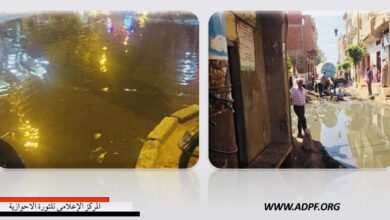
Most cities in Al-Ahwaz suffer from lack of water and of course the occupation authorities have not taken the necessary measures to solve this crisis because they are the ones who caused it, creating dams along the rivers. This crisis has caused an environmental crisis with rivers now filled with sewerage and swamps transformed into dirty stagnant ponds. In addition, it has become a place for disposing poisonous waste from 18 petrochemical factories, threatening the lives and welfare of citizens.
On top of this, Mr Ansari, a member of Abadan city council, has declared that most of Al-Ahwaz suffers from lack of drinking water and more than fifty villages belonging to the Abadan municipal area do not have access to safe drinking water. Ahwaz City member of parliament Sharif Husseini confirmed in an interview with the Shooshan News Agency that the authorities do not prioritise access to safe drinking water and that low river levels are leading to rapid environmental damage.
Sharif Hosseini declared in May 2012 that 200 million cubic metres of sewage water is poured in Karoon River every year. He added that “the rate of pollution in Karoun River is as follows: 48% of the pollution is due to the agricultural sewage water poured into the river, 27% of the homes sewage water belongs to cities by the rivers and 23% of the pollution is the result of factories and companies.”
Ladies and gentlemen
Mr Chairman
The Iranian government’s policy to dry up the rivers, lakes and marshes of Al-Ahwaz has caused an environmental and humanitarian crisis. It forms part of the regime’s systematic programme to force indigenous people from their homeland through the effects of man-made drought on their agricultural lands, forcing them to leave their villages and enabling them to confiscate land. This happened under the sugar cane projects which had led to destruction of 260 Ahwazi villages along the Karoon River and Karkhah. Around 260,000 hectares of the agricultural lands were confiscated for this project by the Iranian government. These projects are of a political nature rather than being based on economic necessity.
Mr Chairman
The dryness of Ahwazi Rivers has led the drought of the greatest marshes in the world known as Al Falahiyah [Shadegan], Al Adheem [Al Azeem] and Al Huwaza Marsh. The drought has endangered our environmental heritage and is now causing dust storms that are affecting the health of Ahwazi Arabs, who can no longer safely leave their homes without a respirator.
Ladies and gentlemen
Everything in Al-Ahwaz is a target of the regime and we warn of an environmental and humanitarian crisis engineered by government policies. We, in the Ahwazi delegation ask you on the basis of humanitarian values and laws to work to prevent Iran’s ethnic cleansing against Ahwazi Arabs which targets people, animals, trees, water and soil.
- Pollution of water in province
http://khouzestan.blogsky.com/1391/04/28/post-7767/
- Shortage of water in the province
http://majles-khozestan.blogfa.com/post-124.aspx
- Ignores of Iranian authorities about the problem of alahwaz
- A member of Parliament warning the water disaster in Alahwaz
http://majles-khozestan.blogfa.com/post-435.aspx
- Important pictures from karoons river
http://ahwaztoday.maktoobblog.com/1321198/
http://www.arabistan.org/detaild.aspx?elmnt=2913
( www.acfh.info )
Email: [email protected]
Ali Moramazy Tel: 00447894291217
Ali saedi Tel: 00447864555134